
Everything You Need to Know When Buying a Colt Pre-Woodsman in America
The Colt Pre-Woodsman refers to the earliest examples of one of the most influential .22 rimfire pistols ever made in America — a design that predates the Woodsman name itself and represents the true starting point of a pistol line that would stay in Colt’s catalog for over six decades. For collectors of vintage Colt .22 target and sporting pistols, understanding exactly what the Pre-Woodsman designation means, and how it differs from later Woodsman production, is essential before buying. This guide covers the term’s origin, the pistol’s early design and history, how collectors categorize it against later series, and what to know before buying one. Colt Pre Woodsman For Sale in USA
What Pre-Woodsman Actually Means
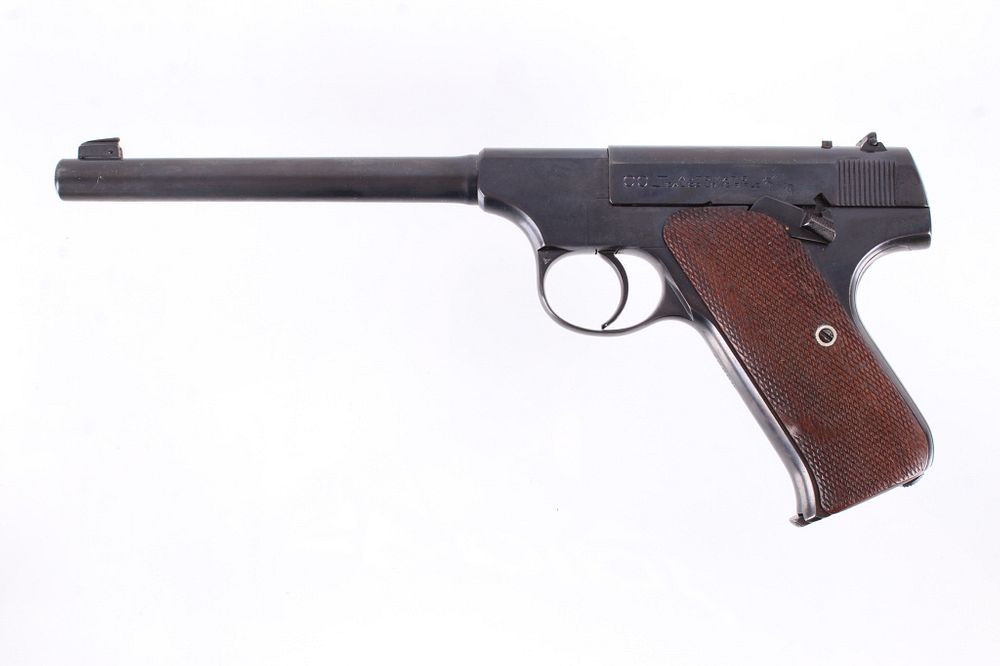
This is worth clarifying immediately, since it’s a source of real confusion even among collectors: Pre-Woodsman isn’t a separate model Colt manufactured under that name. It’s a collector term applied retroactively to the earliest examples of what eventually became the Woodsman line — specifically, pistols made between 1915 and 1927, when Colt was still marketing and marking the gun as the Colt Automatic Target Pistol, before the Woodsman name was applied to the product. Order Colt Pre Woodsman in USA
So when someone refers to a Pre-Woodsman, they mean: a Colt .22 automatic pistol from this earliest production window, mechanically part of the same lineage as every later Woodsman, but predating the actual Woodsman branding. Some collector references also use Pre-Woodsman more loosely to describe the entire pre-WWII First Series (1915–1941/47), though the more precise, narrower usage specifically refers to the 1915–1927 Colt Automatic Target Pistol-era guns before the Woodsman name existed at all.
History: From Colt Automatic Target Pistol to Woodsman
1915: Introduction
Colt introduced this .22 Long Rifle, magazine-fed, semi-automatic target pistol in 1915, drawing on John Browning’s design work, though — notably — Browning didn’t design this pistol entirely on his own; multiple sources are consistent in describing his involvement as substantial but not solitary. The pistol was initially marketed and marked as the Colt Automatic Target Pistol, aimed at the sport and target-shooting market rather than as a defensive or duty sidearm.
1915–1927: The Pre-Woodsman Era
For the first twelve years of production, these pistols carried the Colt Automatic Target Pistol designation rather than the Woodsman name. This is the specific window collectors mean by the narrower definition of Pre-Woodsman. Mechanically, these early guns were built on what collectors now refer to as the First Series “S” frame — the same basic frame design that would continue, essentially unchanged in its core architecture, through the rest of pre-WWII production. Where Can I Buy Colt Pre Woodsman in USA
1927 Onward: The Woodsman Name Arrives
At some point after 1927, Colt began marketing and marking the pistol under the Woodsman name. The underlying pistol didn’t fundamentally change with this renaming — it’s the same First Series S frame design — but from a collector-terminology standpoint, guns made after the name change are generally referred to simply as First Series Woodsman or pre-war Woodsman, while the earlier, differently-marked guns retain the specific Pre-Woodsman designation.
The Broader First Series (1915–1941/1947)
Collectors generally treat the entire span from 1915 through the WWII production halt (with sources citing either 1941 or extending informally to 1947, when Second Series production actually began) as the First Series — encompassing both the true Pre-Woodsman guns (1915–1927) and the subsequently Woodsman-branded pre-war guns (1927 onward). All of these share the same First Series S frame design, distinguishing them collectively from the Second Series (late 1947–1955) and Third Series (1955–1977) frames that followed.
Colt Pre Woodsman For Sale in the USA
Where Can I Buy Colt Pre Woodsman in USA?
Design Features of the Pre-Woodsman and Early First Series
- Caliber: .22 Long Rifle, magazine-fed.
- Magazine release location: On the First Series (including Pre-Woodsman guns), the magazine release was located at the heel of the grip — a detail collectors use to help distinguish First Series guns from Second Series pistols, which moved the release to a round push-button behind the trigger guard (similar in placement to a 1911).
- Sights: Adjustable rear sight (windage) and front sight (elevation) — what Colt referred to as adjustable sights, though a fully adjustable rear sight wasn’t available until later on the dedicated Match Target model. Colt Pre Woodsman For Sale in USA
- Ammunition limitation on early guns: A meaningful practical detail for collectors and shooters: pistols made before 1933 were not designed to safely handle High Velocity .22 LR ammunition — only standard-velocity or target-grade .22 LR should be used in these earliest guns. This is a genuine safety consideration for any Pre-Woodsman or early First Series example, not just a historical footnote.
- Hand-fitting: Like many Colt products of this era, the Woodsman family required extensive hand-fitting during manufacture — a labor-intensive process that, by later standards, would have made continued production prohibitively expensive, and is part of why the entire Woodsman line was eventually discontinued in 1977 rather than modernized. Order Colt Pre Woodsman in USA
Colt Pre Woodsman For Sale in USA: Full Specifications (First Series / Pre-Woodsman Era)
| Specification | Details |
|---|---|
| Designation (1915–1927) | Colt Automatic Target Pistol (“Pre-Woodsman”) |
| Designation (1927 onward, same frame) | Woodsman (First Series) |
| Caliber | .22 Long Rifle |
| Action | Blowback, semi-automatic |
| Feed System | Detachable box magazine |
| Frame | First Series “S” frame |
| Magazine Release | Heel of grip |
| Sights | Adjustable rear (windage), adjustable front (elevation); fully adjustable rear only on Match Target |
| Ammunition Restriction (pre-1933) | Standard/target-velocity .22 LR only — not rated for High Velocity .22 LR |
| Production Span (First Series overall) | 1915–1941 (wartime halt), resuming as Second Series in late 1947 |
Colt Pre Woodsman For Sale in USA: The Three Barrel/Model Variations
Across the Woodsman’s entire history (Pre-Woodsman through Third Series), three main configurations existed, distinguished primarily by barrel length and profile:
- Target Model — 6⅝-inch barrel, the original target-oriented configuration most associated with the line’s early years.
- Sport Model — a shorter 4½-inch barrel, offering a more compact, general-purpose configuration.
- Match Target Model — introduced in 1933, featuring a heavier target barrel profile, offered in both barrel lengths, and specifically associated by later collectors with Bullseye-style competition shooting. The Match Target was also the only variant to receive a fully adjustable rear sight. Colt Pre Woodsman For Sale in USA
Pre-Woodsman-era (1915–1927) examples predate the 1933 introduction of the Match Target variant, meaning true Pre-Woodsman guns are limited to the Target and Sport configurations available during that specific window.
Why the S Frame Series Distinction Matters for Buyers
Collectors organize the entire Woodsman family (and by extension, the Pre-Woodsman) around three frame generations:
| Series | Production Window | Magazine Release Location |
|---|---|---|
| First Series (includes Pre-Woodsman) | 1915–1941 (pre-WWII) | Heel of grip |
| Second Series | Late 1947–1955 | Push-button behind trigger guard (1911-style) |
| Third Series | 1955–1977 | Heel of grip (moved back) |
This matters practically because magazine release location is one of the fastest ways to correctly identify which series a given example belongs to — a genuinely useful, simple diagnostic for a buyer trying to confirm what they’re actually looking at, since sellers don’t always accurately describe or know which series a specific gun represents.
Colt Pre Woodsman For Sale in USA: Production Volume and Collector Value
Colt manufactured more than 600,000 Woodsman-family pistols in total across the full 1915–1977 run, including later economy variants like the Huntsman, Challenger, and Targetsman that lacked features such as adjustable sights and a hold-open action. Within that broader total, true Pre-Woodsman examples (1915–1927, still marked as the Colt Automatic Target Pistol) represent a meaningfully smaller and earlier subset, and some individual specimens across the Woodsman family have been valued at more than $4,000 depending on condition, configuration, and documentation — with genuinely early Pre-Woodsman examples generally commanding particular interest from specialized collectors given their status as the true origin point of the entire product line. Colt Pre Woodsman Price in USA
Who Should Buy a Colt Pre-Woodsman?
Serious Colt collectors specifically interested in the Woodsman line’s true origins — rather than more common later First, Second, or Third Series examples, a true 1915–1927 Colt Automatic Target Pistol represents the actual starting point of this six-decade product family.
Collectors of early 20th-century American .22 target pistols generally — the Pre-Woodsman holds a specific place in the broader history of American rimfire target shooting alongside contemporaries.
Buyers who understand and accept vintage-firearm ownership realities — including the ammunition-velocity restriction on pre-1933 guns, the need for careful inspection before shooting, and the reality that parts and magazines for a century-old design can require more effort to source than modern equivalents.
Buyers who want a modern, low-maintenance .22 pistol for regular shooting should look at contemporary options instead — the Pre-Woodsman’s value is overwhelmingly historical and collector-driven rather than practical, even though many original Woodsman-family guns remain mechanically functional today.
Frequently Asked Questions by Americans
What does Pre-Woodsman actually mean?
It’s a collector term for the earliest Colt .22 automatic target pistols, made from 1915 to 1927, when they were marked as the Colt Automatic Target Pistol rather than Woodsman. The name Woodsman was applied to the same basic design starting sometime after 1927.
Is a Pre-Woodsman mechanically different from an early Woodsman?
No — both are built on the same First Series “S” frame. The distinction is naming/marking and production date, not a fundamental design change.
What caliber is it chambered in?
.22 Long Rifle.
Can I shoot modern .22 LR ammunition in a Pre-Woodsman?
Only standard or target-velocity .22 LR in guns made before 1933 — these early pistols were not designed to safely handle High Velocity .22 LR ammunition, which wasn’t accounted for in the design until 1933.
How do I know if a gun is First, Second, or Third Series?
Magazine release location is the quickest indicator: heel of the grip for First Series (including Pre-Woodsman) and Third Series, versus a push-button behind the trigger guard for Second Series.
How many were made?
More than 600,000 across the entire Woodsman family (1915–1977), including later economy variants. True Pre-Woodsman examples from 1915–1927 represent a smaller, earlier subset of that total.
What’s the difference between the Target, Sport, and Match Target models?
The Target model uses a 6⅝-inch barrel; the Sport model uses a shorter 4½-inch barrel; the Match Target (introduced 1933, after the Pre-Woodsman era) uses a heavier target barrel profile in either length and was the only variant with a fully adjustable rear sight.
Are these valuable?
Some Woodsman-family examples have been valued at more than $4,000 depending on condition and configuration, with genuinely early Pre-Woodsman guns of particular interest to specialized collectors given their status as the line’s origin point.
Colt Pre-Woodsman Maintenance and Care Tips
- Use only standard or target-velocity .22 LR ammunition — never High Velocity .22 LR in a pre-1933 example, given the design limitations of that era.
- Have any example inspected by a gunsmith familiar with vintage Colt semi-automatics before shooting, given the pistol’s age and the hand-fitted nature of its original construction.
- Handle original magazines with care — period-correct magazines can be harder to source than modern reproductions, and mismatched or damaged magazines can affect both function and collector value.
- Store properly, with a light coat of gun oil on exposed metal surfaces and dry, secure storage to protect both function and finish. Colt Pre Woodsman Shop in USA
- Document provenance carefully — given the collector value tied to correctly identifying series, configuration, and originality, keeping any accompanying paperwork, letters, or documentation with the firearm matters significantly for long-term value.
- Consult specialized references (such as dedicated Woodsman collector resources) for serial number ranges and dating specific to the exact example under consideration, since precise production windows and running changes are well documented by specialist collectors.
Conclusion
This one comes down to a naming puzzle more than a spec sheet. The gun that eventually became one of the longest-running .22 pistol lines in American history — 62 years, 600,000-plus units — didn’t start out as the Woodsman at all. For its first twelve years it was the Colt Automatic Target Pistol, and Pre-Woodsman is simply what collectors call those earliest guns retroactively. Mechanically it’s the same First Series S frame that carried through to 1941 — the name changed, the gun underneath didn’t. Colt Pre Woodsman Near Me USA
Be the first to review “Colt Pre Woodsman .22 in USA”
Related products
Colt Firearm For Sale in USA
Colt Firearm For Sale in USA
Colt Firearm For Sale in USA
Colt Firearm For Sale in USA
Colt Firearm For Sale in USA
Colt Firearm For Sale in USA
Colt Firearm For Sale in USA
Colt Firearm For Sale in USA
Reviews
There are no reviews yet.