
Everything You Need to Know When Buying Ruger LCR in .38 Special +P USA
The Ruger LCR was, when announced on January 14, 2009, a genuinely radical departure from how snub-nosed revolvers had been built for over a century — a small-frame .38 Special that replaced much of the traditional steel construction with polymer and aluminum. It drew real skepticism from longtime revolver writers who doubted a polymer-framed .38 Special could hold up to serious use. It has since become one of the most respected and widely carried lightweight defensive revolvers on the market. This guide covers the LCR’s genuinely novel engineering, how it answered its early skeptics, full specifications, and what to know before buying one. Ruger LCR .38 Special +P in USA
LCR Stands for Lightweight Compact Revolver — And It Delivers on That Name
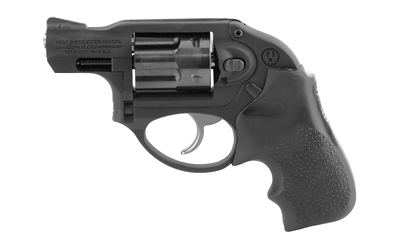
Ruger’s design objective was direct and specific: build a genuinely lightweight defensive revolver, and don’t compromise on that goal. By mating a polymer fire control housing and grip frame to an aluminum upper (which itself houses a steel barrel and stainless steel cylinder), Ruger created what one longtime revolver reviewer described as a flyweight revolver that bests the aluminum-framed Smith & Wesson J-Frame — the long-established benchmark in this exact category — on raw weight. The base .38 Special LCR weighs just 13.5 ounces, a genuinely remarkable figure for a revolver of any material construction. Ruger LCR .38 Special +P For Sale in SA
The Skeptical Reception — and the 5,000-Round Answer
This is worth telling honestly, because it captures exactly why the LCR’s reputation had to be earned rather than assumed. One veteran gun writer, reviewing the LCR shortly after its January 2009 announcement, described his immediate reaction plainly: “No way can that thing go the distance!” He’d made peace over the years with the industry’s move from all-steel snub revolvers to aluminum, titanium, and scandium-framed guns — but a polymer-framed .38 Special felt like a step too far.
So he tested it directly: Ruger provided a sample LCR, and Black Hills Ammunition supplied 5,000 rounds of premium 125-grain .38 Special +P jacketed hollow-point ammunition for a genuine endurance run — a serious volume of full-power +P ammunition through a genuinely small, lightweight gun. The results, described by the reviewer as quite interesting, ultimately validated Ruger’s engineering rather than confirming the initial skepticism. This kind of real-world stress-testing is a significant part of why the LCR earned trust in the defensive-revolver community relatively quickly despite its unconventional construction.
The Engineering: Three Genuinely Patented Innovations
Ruger’s official product materials specifically highlight three patented engineering elements that define the LCR platform, and they’re worth understanding individually since each solves a different problem:
1. The Monolithic Frame
Rather than a traditional frame built from multiple fitted steel components, the LCR uses a monolithic (single-piece) frame. In .22 LR, .22 WMR, and .38 Special models, this frame is machined from aerospace-grade 7000-series aluminum; in the more powerful .357 Magnum, 9mm Luger, and .327 Federal Magnum chamberings, the frame switches to 400-series stainless steel to handle the higher pressures those cartridges generate. The .38 Special version’s frame specifically undergoes a black hardcoat anodizing treatment after final machining — a finish Ruger states exceeds military-specification salt tests and resists at least 30 different chemicals, including common cleaning solvents. Buy Ruger LCR .38 Special +P in USA
2. The Patented Friction-Reducing Cam
This is the component most directly responsible for the LCR’s widely praised trigger feel. Described by Ruger as a next generation design in fire control systems, the friction-reducing cam produces a trigger pull reviewers consistently describe as smooth and notably free of “stacking” (the sensation of resistance building sharply just before the trigger breaks) — a genuine, patented mechanical improvement over more traditional revolver trigger designs.
3. The Patented Polymer Fire Control Housing
This component holds all of the gun’s fire control parts in their correct dimensional relationships, while significantly reducing overall weight and helping to reduce felt recoil — the specific innovation that makes the LCR’s extreme lightness possible without sacrificing the durability and consistency of the internal mechanism. Order Ruger LCR .38 Special +P in USA
The Cylinder: An Odd-Looking Duck With a Real Engineering Purpose
One detailed reviewer described the LCR’s stainless steel cylinder as an odd-looking duck, and it’s worth explaining why it looks the way it does. The cylinder features exaggerated fluting (reducing weight, consistent with the platform’s overall lightweight philosophy) and — more technically interesting — offset cylinder stop notches positioned between the chambers rather than directly over them. This offset positioning specifically helps maintain chamber wall strength in the LCR’s small-dimensioned cylinder, since removing material for a stop notch directly over a chamber would weaken that specific chamber wall more than offsetting the notch does. The cylinder is coating in a specially develop version of Ruger’s Target Grey finish (or, on other configurations, a PVD finish for enhance durability). Ruger LCR .38 Special +P in USA
Ruger LCR .38 Special +P in USA
The Ruger LCR .38 Special +P represents exceptional American firearm craftsmanship, skillfully merging expert design with artistic flair. Its rich heritage draws in enthusiasts, making it a popular choice for collectors who appreciate tradition and for shooters who prioritize precision. In terms of appearance, the Ruger LCR .38 Special +P displays graceful contours and detailed construction, achieving an impressive balance of strength and elegance. This firearm goes beyond mere functionality; it acts as a work of art that often inspires conversations among collectors and firearm enthusiasts.
Made from durable stainless steel, the Ruger LCR .38 Special +P is equip with a sturdy frame design for reliable long-term performance. Its enduring durability assures dependable use, even in difficult conditions. Internally, this model incorporates a thoughtfully engineered mechanism that assures smooth operation and exceptional shooting performance. The meticulously crafted trigger pull improves the shooting experience, allowing users to accurately hit their targets. Whether during a hunting trip or at the shooting range, this handgun remains a reliable partner, consistently providing outstanding results.
Where Can I Buy Ruger LCR .38 Special +P in USA?
At the American Firearms Online Shop, you’ll discover a diverse selection of Ruger LCR .38 Special +P models, carefully curated for avid collectors. The inventory also features top-quality accessories, including both stylish and functional holsters, alongside vital maintenance tools for firearms. Every transaction emphasizes privacy and security, ensuring a reliable shopping experience backed by a satisfaction guarantee.
The Ruger LCR .38 Special +P appeals to a wide range of individuals, whether you’re a collector looking to grow your assortment, a hunter in search of reliable performance, a competitor aiming for success, or anyone needing a dependable personal defense firearm. This well-respected gun masterfully blends traditional craftsmanship with modern design, solidifying its esteemed status among firearm aficionados throughout the United States.
Full Specifications: LCR, .38 Special +P
| Specification | Details |
|---|---|
| Manufacturer | Sturm, Ruger & Co. |
| Type | Double-action-only (DAO) revolver |
| Announced | January 14, 2009 |
| Production Began | 2010 |
| Caliber | .38 Special (rated for +P) |
| Capacity | 5 rounds |
| Barrel Length | 1.875″ |
| Overall Length | 6.5″ |
| Height | 4.5″ |
| Width | 1.28″ |
| Weight | 13.5 oz |
| Frame | Monolithic, aerospace-grade 7000-series aluminum, black hardcoat anodized |
| Barrel | 17-4 pH stainless steel, housed inside an outer shroud extending forward from the alloy frame |
| Cylinder | 400-series stainless steel, extensively fluted, offset cylinder stop notches, Target Grey or PVD finish |
| Front Sight | Serrated black steel ramp blade, pinned into the shroud (later models offer an XS tritium dot front sight option) |
| Rear Sight | Fixed, wide/shallow squared U-notch |
| Rifling | 1:16″ right-hand twist |
| Grip Frame | Polymer, with grip peg system compatible with multiple grip styles |
| MSRP | Approximately $579–$669, depending on configuration |
Trigger Feel: A Genuine Step Up From the Category Benchmark
This is one of the most consistently praise aspects of the LCR across independent reviews. One detail reviewer specifically compared the LCR’s trigger directly against the long-establish Smith & Wesson J-Frame — the category’s traditional benchmark — describing the LCR’s pull as sufficiently light and smooth to feel like a marked improvement over the standard J-Frame trigger. The same reviewer also praised the LCR’s sights as a genuine upgrade over J-Frame standard sights: a wider blade with white highlights paired with a wider notch, producing a more contrasting, visible sight picture than the competition typically offers out of the box. Ruger LCR .38 Special +P in USA
The Grip Peg System: Borrowed Philosophy From the GP100
Like the GP100 cover elsewhere in this series, the LCR uses a grip peg system — a compact attachment point that allows a variety of different grip styles to be install on the same underlying frame, rather than requiring different frame shapes for different grip preferences. Many LCR configurations ship standard with a Hogue Tamer Monogrip, specifically chosen to help reduce perceived recoil — a genuinely important feature on a gun this light firing .38 Special +P ammunition, since a lighter gun inherently transmits more felt recoil than a heavier one firing the same cartridge. Where Can I Buy Ruger LCR .38 Special +P in USA
The Broader LCR Family: How the .38 Special Fits In
The LCR launched in .38 Special first, and Ruger expanded the platform steadily over the following years based on its rising popularity:
| Caliber | Introduced | Cylinder Capacity |
|---|---|---|
| .38 Special +P | 2009/2010 (original launch) | 5 rounds |
| .357 Magnum (LCR-357) | June 2010 | 5 rounds |
| .22 LR | December 2011 | 8 rounds |
| .22 WMR | Summer 2013 | 6 rounds |
| 9mm Luger | Autumn 2014 | 5 rounds |
| .327 Federal Magnum | 2015 | 6 rounds |
The .38 Special version remains the platform’s original and arguably most iconic configuration — the one that established the LCR’s reputation before the lineup expanded into other chamberings.
LCRx: The Hammer-Equipped Variant
In 2014, Ruger introduced the LCRx, adding an external hammer to the LCR platform — meaning the x in LCRx specifically denotes double-action/single-action (DA/SA) capability, as opposed to the standard LCR’s double-action-only operation. A 3-inch-barreled LCRx model (officially Model 5431) in .38 Special +P has been specifically praised by reviewers as excelling in both single-action and double-action modes, with its prominent white ramped front sight and well-contoured lines drawing particular praise. Reviewers have also noted that 3-inch-barreled revolvers historically haven’t been especially popular in the American market — buyers have tended to gravitate toward barrel lengths (2-inch and 4-inch) more closely associated with historical military and police issue — making the LCRx’s 3-inch option a slightly less common, but well-regarded, middle-ground choice. Ruger LCR .38 Special +P Price in USA
LCR vs. Smith & Wesson J-Frame: The Direct Category Comparison
| Feature | Ruger LCR (.38 Special) | S&W J-Frame (Airweight, comparable) |
|---|---|---|
| Weight | 13.5 oz | Generally heavier, given aluminum-only construction |
| Frame Construction | Polymer fire control housing + aluminum upper | Aluminum alloy throughout |
| Trigger Feel | Widely praised as smoother, non-stacking | Good, but often described as heavier/less refined by comparison |
| Sights | Wider blade/notch, more visible picture | Traditional, narrower J-Frame sights |
| Grip System | Peg-based, multiple grip styles compatible | More limited grip interchangeability |
| Category Standing | Newer entrant, but widely respected | Long-established category benchmark |
Bottom line: the LCR entered a category the J-Frame had essentially defined for decades and, according to a substantial body of independent reviewer opinion, matched or exceeded it on weight, trigger feel, and sight quality — a genuinely significant accomplishment for a newer, structurally unconventional design.
Who Should Buy a Ruger LCR in .38 Special +P?
Concealed carriers who prioritize absolute minimum weight — at 13.5 ounces, the LCR is among the lightest .38 Special revolvers available, genuinely disappearing into pocket or ankle carry.
Buyers who want a meaningfully better trigger than the traditional J-Frame benchmark — the patented friction-reducing cam is a genuine, widely praised mechanical advantage.
Buyers who initially doubt polymer-framed revolver durability — the platform’s now well-established track record, including documented high-round-count endurance testing, has largely answered the skepticism the design faced at launch.
Consumers who want grip customization flexibility — the peg grip system allows swapping grip styles more easily than many traditional J-Frame-style revolvers permit.
Buyers who specifically want a single-action option should look at the LCRx variant instead, since the standard LCR is double-action-only.
Buyers who want maximum capacity or larger-caliber power in this frame size should consider the .357 Magnum LCR-357 or the 9mm/.327 Federal Magnum variants, depending on priorities.
Frequently Asked Questions by Americans
What does LCR stand for?
Lightweight Compact Revolver.
How much does it weigh?
13.5 ounces in the base .38 Special configuration — notably lighter than the traditional aluminum-framed S&W J-Frame it’s most often compared against.
What’s the frame made of?
A monolithic aerospace-grade 7000-series aluminum upper mated to a patented polymer fire control housing and grip frame; .357 Magnum, 9mm, and .327 Federal Magnum versions use a stronger 400-series stainless steel frame instead, given those cartridges’ higher pressures.
Is it rated for .38 Special +P?
Yes.
How many rounds does it hold?
5 rounds in the .38 Special configuration.
What’s the difference between the LCR and the LCRx?
The standard LCR is double-action-only; the LCRx (introduced 2014) adds an external hammer for double-action/single-action capability.
Is the trigger really better than a J-Frame’s?
Independent reviewers who’ve directly compared the two consistently describe the LCR’s patented friction-reducing cam as producing a smoother, less “stacky” pull than the traditional S&W J-Frame trigger.
Has it been proven durable despite its polymer construction?
Yes — documented high-round-count testing (including a 5,000-round endurance run using premium .38 Special +P ammunition) has helped establish the platform’s genuine durability, addressing early skepticism the design faced at its 2009 announcement.
Ruger LCR .38 Special +P Maintenance Tips: Ruger LCR .38 Special +P in USA
- Clean after every range session, with particular attention to the forcing cone and each individual cylinder chamber, given the offset stop-notch cylinder design.
- Use standard-pressure .38 Special for extended practice sessions, reserving +P ammunition for carry and periodic function testing, given how much more recoil a 13.5-ounce gun transmits compared to a heavier revolver firing the same +P load.
- Care for the black hardcoat anodized finish — while genuinely durable and chemical-resistant per Ruger’s own testing claims, routine cleaning and light lubrication still help preserve long-term appearance and function. Order Ruger LCR .38 Special +P in USA
- Experiment with grip options using the peg grip system if the factory grip doesn’t suit your hand size or carry method.
- Store unloaded in a secure location, separate from ammunition, with light lubrication on exposed metal surfaces per Ruger’s recommendations.
Conclusion
The LCR earned its reputation the hard way — through skepticism, not hype. Longtime revolver writers who’d already made peace with aluminum and titanium snub-nosed guns looked at a polymer-framed .38 Special in 2009 and doubted it outright. Ruger’s answer wasn’t marketing copy; it was 5,000 rounds of premium +P ammunition through a real sample gun, and the design held up. That’s the kind of proof that actually changes minds in a category as tradition-bound as small-frame revolvers.
Be the first to review “Ruger LCR .38 Special +P in USA”
Related products
Ruger Firearm For Sale USA
Ruger Firearm For Sale USA
Ruger Firearm For Sale USA
Ruger Firearm For Sale USA
Ruger Firearm For Sale USA
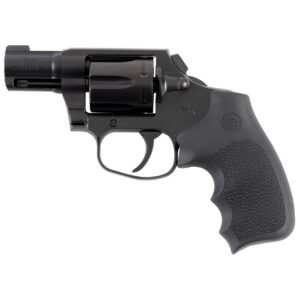
Ruger Firearm For Sale USA
Ruger Firearm For Sale USA
Ruger Firearm For Sale USA
Reviews
There are no reviews yet.