
Everything You Need to Know When Buying a Genuine Colt Single Action Army in America
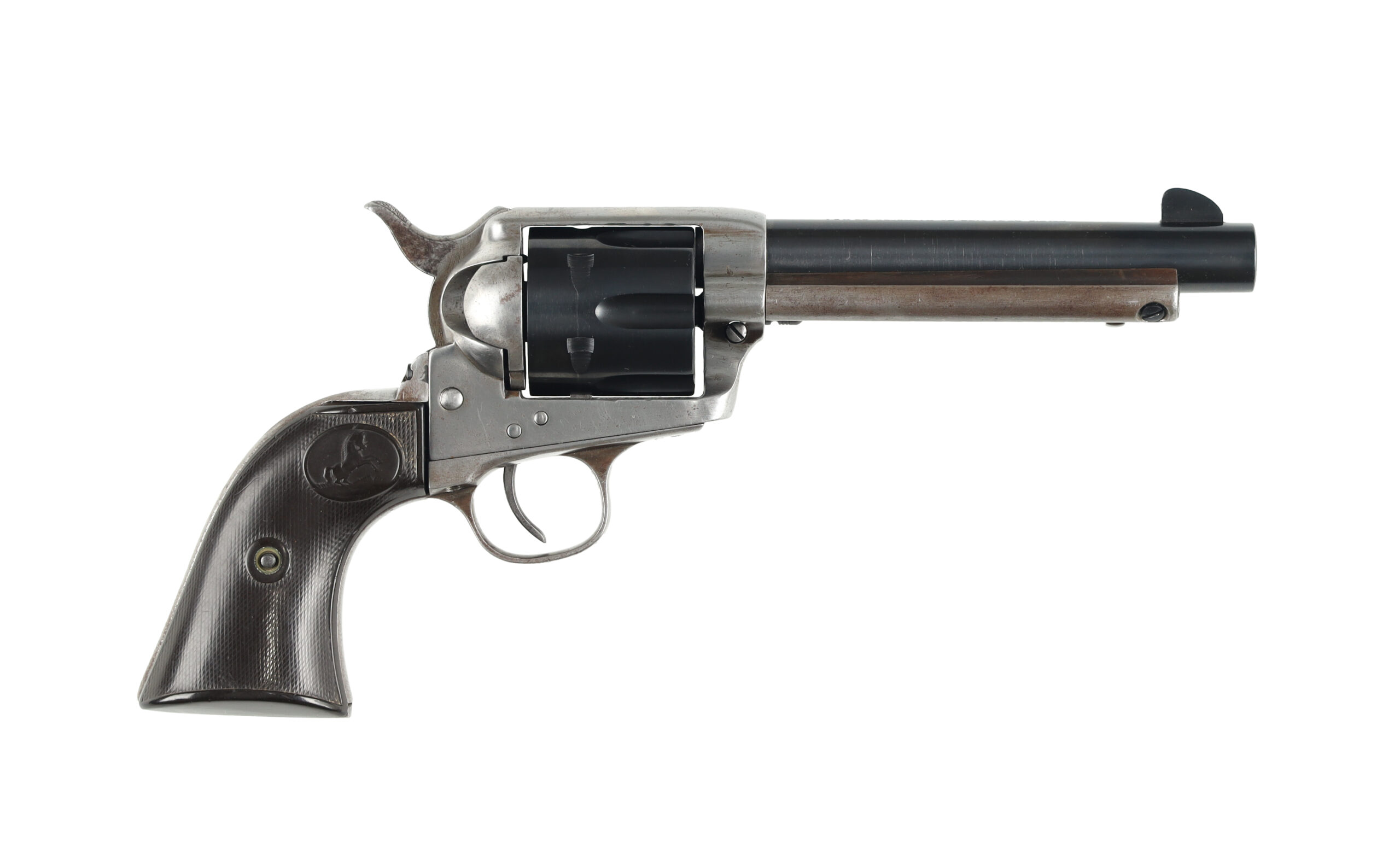
The Colt Single Action Army — universally known as the Peacemaker — is arguably the single most culturally significant firearm ever produced in the United States. Adopted by the U.S. Army in 1873 and still in production today, it has the rare distinction of spanning more than 150 years of American history while remaining recognizably the same gun throughout. This guide covers the genuine Colt-manufactured SAA specifically (as opposed to the Italian-made replicas covered in a separate guide) — its origin, its three collector generations, full specifications, and what to know before buying an original, vintage, or current-production example. Colt Single Action Army For Sale in USA
Origins: 1873 and the Birth of an American Icon
Colt introduced the Single Action Army in 1873, after the U.S. government selected a .45-caliber revolver as the standard military sidearm. Colt’s own records document more than 30,000 government deliveries between 1873 and 1891 alone — the beginning of a relationship between this design and the U.S. military, law enforcement, and civilian markets that would stretch across the next century and a half. Buy Colt Single Action Army in USA
Mechanically, the SAA is a fixed-cylinder, single-action revolver: the hammer must be manually cocked before each shot, cartridges are loaded individually through a side loading gate, and spent cases are ejected one at a time using a spring-loaded ejector rod — a genuinely slow process by modern standards, but one that defined an entire era of American firearms design and use.
The First Generation (1873–1940, with limited Pre-War, Post-War guns after)
From 1873 through 1940, Colt produced 357,859 First Generation Single Action Army revolvers (with a small additional number assembled during and shortly after World War II, sometimes referred to as “Pre-War, Post-War” guns). This first run spanned at least thirty different chamberings, ranging remarkably widely from .22 rimfire all the way up to .476 Eley. Order Colt Single Action Army in USA
Within that chambering variety, .45 Colt was by far the most common, accounting for roughly half of all First Generation production — approximately 158,884 units, including Bisley and Flat Top Target variations. The next most common chamberings were .44-40 Winchester Center Fire (71,392 units), .38-40 (50,520 units), .32-20 Winchester (43,284 units), and .41 Colt (19,676 units). Cavalry and Artillery models specifically produced between 1873 and 1891 are among the most valuable and sought-after examples within First Generation collecting.
Colt discontinued First Generation production around World War II as the company shifted its manufacturing capacity toward wartime production needs.
The Second Generation (1956–1974)
After more than a decade without SAA production, Colt reintroduced the Single Action Army in 1956, driven substantially by renewed cultural interest in Westerns during that era. Second Generation guns are nearly identical to First Generation production, with some smaller manufacturing improvements, and carry serial numbers in the range of 0001SA to 73,205SA. A distinguishing visual detail: Second Generation hammers are blued with polish white sides, and Second Generation cylinders carry a distinctive Rampant Colt stamp on the back with serial numbers on the front — a detail that disappear on Third Generation guns and serves as one of the easiest ways to visually distinguish the two generations today. Where Can I Buy Colt Single Action Army in USA
Notable variations during this period included:
- The Buntline — a long-barreled variant that capitalized on the popularity of the television show The Life and Legend of Wyatt Earp, starring Hugh O’Brian.
- The Sheriff’s Model — another period variation within Second Generation production.
- The New Frontier (1961–1975) — an adjustable-sight model whose name capitalized on President John F. Kennedy’s campaign slogan. Colt manufactured 4,200 New Frontier revolvers, including 70 built on the longer Buntline frame.
By 1974, waning interest led Colt to quietly discontinue Second Generation production — a decision reportedly made without much industry fanfare at the time, as noted by firearms writer Skeeter Skelton in contemporary reporting.
Colt Single Action Army For Sale in USA
Where Can I Buy Colt Single Action Army in USA?
The Third Generation (1976–Present, With Interruptions)
Colt reintroduced the SAA again in 1976, beginning at serial number 80000SA, in what’s now classified as Third Generation production. This generation introduced a genuine mechanical change: Colt altered the barrel and frame thread pitch from 20 to 24 threads per inch, and replaced the removable/replaceable cylinder bushing used in the first two generations with a solid, press-fitted cylinder bushing — changes made partly in an effort to help control production costs while keeping the core SAA design fundamentally the same three barrel lengths, two primary finishes, and hard rubber grip configuration that had defined the gun since 1873.
Interruptions and the Late Third Generation Question
Third Generation production has not been continuous:
- The initial 1976–1982 run was treating as a limiting-issue product, running through serial number SA99,999, before Colt removed the SAA from its standard catalog in 1982 (though Custom Shop special orders continued).
- The SAA returned to Colt’s standard catalog in 1993, and broader production resumed in 1994, driven significantly by the rising popularity of Cowboy Action Shooting as a competitive sport.
- Production resuming in 1994 introduced yet another serial number convention (starting with S02001A, continuing with an “S” prefix and “A” suffix through 2009), and also saw a return to the original-style removable/replaceable cylinder bushing rather than the solid bushing introduced in 1976.
- Some collectors informally refer to this later production as a “Fourth Generation” given these changes, but Colt itself has continued to classify all of this as Third Generation, since the return to the earlier bushing design didn’t represent an official new factory generation designation on Colt’s part.
Colt was still producing Third Generation Single Action Army revolvers as of American Rifleman’s 150th-anniversary history of the gun published in 2023, and current Third Generation production continues today.
Full Specifications: Current Third Generation Production
| Specification | Details |
|---|---|
| Type | Single-action, fixed-cylinder revolver |
| Caliber | .45 Colt (standard current catalog offering) |
| Capacity | 6 rounds |
| Barrel Lengths | 4¾”, 5½”, 7½” |
| Finish | Blued with color case-hardened frame, or all-nickel |
| Cylinder Bushing | Removable/replaceable (current production) |
| Grips | Hard rubber (standard); walnut with Rampant Colt medallions on nickel-finished guns |
| MSRP | Approximately $1,799 (standard configuration) |
| Custom Shop Options | Additional finishes, engravings, and special configurations available at added cost |
Note: while current standard catalog offerings focus on .45 Colt, historical records indicate Colt has at various points offered the SAA across six chamberings (.32-20, .38-40, .44-40, .38 Special, .357 Magnum, and .45 Colt) across roughly 36 total historical variations combining calibers, barrel lengths, and finishes — buyers interested in a non-.45-Colt chambering should confirm current availability directly with Colt, since standard current catalog offerings are more limited than the gun’s full historical range. Colt Single Action Army For Sale in USA
The Colt Cowboy: A Related but Distinct Budget Model
Buyers researching the SAA may also encounter the Colt Cowboy, a related but importantly distinct model Colt produced beginning in 1999. The Cowboy was specifically design as a more affordable alternative to the true Single Action Army, and — notably — incorporating a modern transfer bar safety system, allowing it to be safely carried with the hammer resting on a loading chamber, unlike the traditional SAA design. It was offer in 4.75-, 5.5-, and 7.5-inch barrel lengths, with some lengths discontinued and later reintroduced at different points, before Colt discontinued the Colt Cowboy entirely in 2003. Buyers specifically seeking a genuine Third Generation SAA should be careful not to confuse it with a Colt Cowboy, since the two are meaningfully different products with different safety mechanisms, despite superficial visual similarity. Colt Single Action Army Price in USA
Colt Single Action Army For Sale in USA: A Note on Traditional Loading Safety
The traditional Single Action Army design (across all three generations, unlike the Colt Cowboy) lacks a modern transfer-bar safety system, meaning the firing pin can potentially contact a cartridge if the hammer is struck or drop while resting directly on a loading chamber. For this reason, the traditional and widely recommended practice with an original-pattern SAA is to load only five rounds and rest the hammer on an empty chamber, rather than carrying all six chambers loaded — a practice rooted in the gun’s original mechanical design rather than a mere suggestion. Buyers new to single-action revolvers of this type should specifically familiarize themselves with this loading practice before use. Colt Single Action Army Near Me USA
Collector Considerations by Generation
| Generation | Years | Key Identifying Features | Collector Notes |
|---|---|---|---|
| First | 1873–1940 (+ limited post-war) | Widest chambering variety (30+ calibers); Cavalry/Artillery models (1873–1891) most valuable | Highest collector premium, especially for military-marked and early examples |
| Second | 1956–1974 | Rampant Colt stamp on cylinder back; blued hammer with polished white sides | Rising collector interest; nickel-finished guns command a premium over blued |
| Third | 1976–present | No Rampant Colt cylinder stamp; “S…A” serial format; bushing type varies by exact production era | Currently in production; still offers genuine new-Colt ownership |
Examining a specific gun’s complete serial number, and comparing frame, trigger guard, and backstrap markings before considering the cylinder, barrel, grips, screws, and internal components, is the recommended approach for accurately identifying generation and specific production era — since serial number format alone shouldn’t be considered in isolation, particularly given how cylinders have sometimes been swapped between guns of different generations over the decades. Colt Single Action Army Shop in USA
Who Should Buy a Genuine Colt Single Action Army?
Collectors specifically seeking genuine Colt manufacture and provenance — as opposed to the (also well-regarded) Italian replica market, a genuine Colt SAA carries manufacturer prestige and historical continuity that no replica, however faithful, can claim.
Collectors of First or Second Generation examples specifically — particularly military-marked Cavalry/Artillery models or notable variants like the Buntline and New Frontier, which hold significant standalone collector interest beyond the base model. Colt Single Action Army Dealer in USA
Cowboy Action Shooting participants who specifically want genuine Colt manufacture — though many competitors in this sport use Italian replicas instead, given genuine Colt pricing relative to the cost of a dedicated competition gun that will see heavy use.
Buyers who want the most affordable path to SAA-style ownership should consider either a quality Italian replica or, if available on the used market, a Colt Cowboy — understanding that the latter is a distinct product with a different (and arguably safer) internal mechanism than the traditional SAA.
Frequently Asked Questions by Americans
How many generations of Colt Single Action Army have there been?
Three, according to Colt’s own classification: First Generation (1873–1940, plus limited post-war examples), Second Generation (1956–1974), and Third Generation (1976–present, with interruptions in 1982–1993/94).
Is Colt still making the Single Action Army today?
Yes — Third Generation production continues, with a current standard MSRP around $1,799 for the standard .45 Colt, blued and case-hardened configuration.
What’s the difference between Second and Third Generation guns?
The easiest visual distinction is the cylinder: Second Generation cylinders carry a Rampant Colt stamp on the back with serial numbers on the front; this stamp was omitted on Third Generation cylinders.
What caliber is the current production SAA chambered in?
The current standard catalog offering is .45 Colt, though Colt has historically produced the gun across six calibers and roughly 36 total variations; non-standard chamberings should be confirmed directly with Colt or through Custom Shop orders.
What’s the difference between a Colt Single Action Army and a Colt Cowboy?
The Colt Cowboy (1999–2003) was a more affordable, related model featuring a modern transfer bar safety system, allowing it to be carried safely with all six chambers loaded — unlike the traditional SAA, which lacks this modern safety and is traditionally carried with only five rounds loaded.
Is it safe to carry all six chambers loaded on a traditional SAA?
No — traditional practice (across all three generations) is to load only five rounds and rest the hammer on an empty sixth chamber, since the design lacks a modern transfer-bar safety system.
How can I tell what generation and specific configuration my SAA is?
Examine the complete serial number alongside frame, trigger guard, backstrap, cylinder, barrel, grip, and screw details — serial number format alone isn’t always sufficient, since cylinders have sometimes been swapped between guns over the decades.
Colt Single Action Army Maintenance Tips
- Clean after every range session, with particular attention to the forcing cone, individual cylinder chambers, and the loading gate/ejector mechanism, given the SAA’s traditional single-round-at-a-time loading and ejection process.
- Follow the five-round loading practice on any traditional-pattern SAA (First, Second, or Third Generation) unless specifically confirmed otherwise for a modified or safety-equipped variant.
- Store properly, with a light coat of gun oil on exposed metal and dry, secure storage to protect both blued and color case-hardened finishes, which can be particularly sensitive to moisture and handling wear.
- Have vintage First or Second Generation examples inspected by a gunsmith familiar with Colt single-actions before regular shooting use, given the age of these guns and their significant collector value. Colt Single Action Army For Sale in USA
- Document provenance carefully, especially for military-marked or historically significant examples, since documentation meaningfully affects long-term collector value.
- Consult specialized Colt SAA collector references or the Custom Shop directly for questions specific to an individual gun’s exact configuration, given the complexity of generational and running changes across 150-plus years of production.
Conclusion
This is the gun everything else in the “snake gun” and 1911 families ultimately traces back to, at least in spirit — the design that made Colt’s name synonymous with the American West before any of those other product lines existed. What’s remarkable isn’t just its age; it’s that Colt has now brought it back from discontinuation twice (1956 and again in 1976, after further interruptions through 1993), and it’s still in the catalog today at $1,799, essentially unchanged in concept from 1873. Few products in any industry can claim that kind of continuity.
| Options | Single Action Army 4.75, Single Action Army 5.5, Single Action Army 7.5 |
|---|
Be the first to review “Colt Single Action Army in USA”
Related products
Colt Firearm For Sale in USA
Colt Firearm For Sale in USA
Colt Firearm For Sale in USA
Colt Firearm For Sale in USA
Colt Firearm For Sale in USA
Colt Firearm For Sale in USA
Colt Firearm For Sale in USA
Colt Firearm For Sale in USA
Reviews
There are no reviews yet.