
Everything You Need to Know When Buying a Colt Model 1903 Pocket Hammerless in America
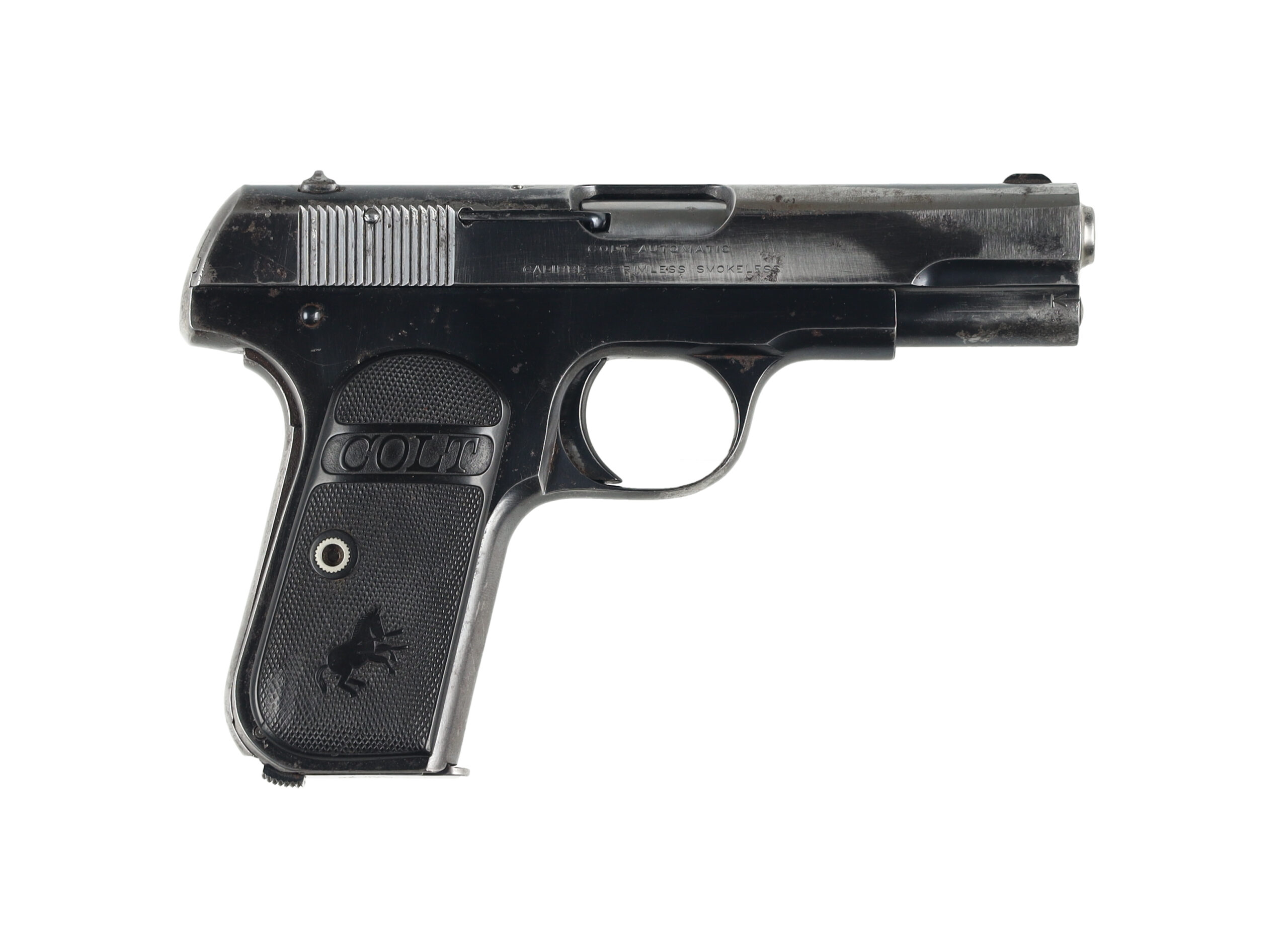
The Colt Model 1903 Pocket Hammerless is one of the most historically important semi-automatic pistols ever made in America — a John Browning design that helped define what a compact, concealable self-loading pistol could be, decades before that category became standard. Produced for 42 years and issued to some of the most famous generals in American military history, the 1903 occupies a unique place as both a genuinely significant collector’s item and, for many owners, a firearm that’s still entirely shootable today. This guide covers its full history, design, variants, the modern licensed reproduction, and what to know before buying either an original or a new-production example. Colt Model 1903 Pocket Hammerless in USA
Why Hammerless Is a Bit of a Misnomer
Despite its name, the Model 1903 Pocket Hammerless does have a hammer — it’s simply concealed, hidden from view under the rear of the slide rather than exposed the way it is on most contemporaneous pistols and revolvers. That covered-hammer design wasn’t a gimmick; it served a genuine practical purpose, allowing the pistol to be drawn from or returned to a pocket quickly and smoothly without the hammer snagging on clothing or a holster. This detail is central to understanding the entire design philosophy behind the gun: it was built from the ground up as a discreet, easily carried personal pistol, not a duty or combat sidearm in the traditional sense. Where To Buy Colt Model 1903 Pocket Hammerless in USA
History: From 1903 Design to 1945/1946 Discontinuation
Origins and Design
The Model 1903 was designed by John Browning and manufactured by Colt’s Patent Firearms Manufacturing Company in Hartford, Connecticut. It used a blowback-operated, single-action design chambered in .32 ACP (7.65mm Browning) — a cartridge suited to the simpler, lighter blowback mechanism the pistol employed, as opposed to the more powerful cartridges that required a locked-breech design. The pistol featured a grip safety, and later production incorporated a manual thumb safety as well as a magazine disconnect safety, reflecting incremental design refinements over its long production run.
The .380 ACP Sibling: Model 1908
Five years after the 1903’s introduction, Colt released the Model 1908 Pocket Hammerless — mechanically nearly identical to the 1903, but chambered in the slightly more powerful .380 ACP (9mm Short) cartridge. The two models are frequently discussed together, since they share the same basic design, differing mainly in caliber, magazine capacity, and minor dimensional adjustments to accommodate the larger .380 ACP cartridge. Colt Model 1903 Pocket Hammerless in USA
Five Types Across Four Decades
Colt produced the Model 1903/1908 Pocket Hammerless family in five distinct types (Type I through Type V) between 1903 and 1945–1946 (sources differ slightly on the exact final year), with each type reflecting incremental internal and external refinements rather than a wholesale redesign. Type I used a slightly longer 4-inch barrel and 7-inch overall length; Types II through V shortened this to a 3.75-inch barrel and 6.75-inch overall length, the configuration most commonly associated with the model today.
Total Production
Approximately 570,000 Colt Pocket Hammerless pistols were produced across the full 1903–1945 run (combining both .32 ACP Model 1903 and .380 ACP Model 1908 production), making it a genuinely high-volume product for its era, even though clean surviving examples in top condition remain sought after today. Can I Buy Colt Model 1903 Pocket Hammerless in USA
Military and General Officer Use
Beyond its enormous civilian popularity, the Pocket Hammerless found a specific and famous niche: it served as the issued sidearm for U.S. Army and U.S. Air Force general officers from World War II through the early 1970s, when it was replaced by the M15 General Officer’s Model (a compact variant of the M1911A1) in 1972. General officer examples were often engraved with the recipient’s name, and famously included pistols issued to Generals Eisenhower, Bradley, Marshall, and Patton — Patton’s Model 1908 was notably embellished with stars on the grip panels denoting his rank. These pistols were issued with a fine-grade leather holster, a leather pistol belt with a gold-metal clasp, a rope lanyard with gold-metal fittings, and a leather ammunition pouch — a presentation package that adds significant historical and collector interest to surviving general officer examples.
Colt Model 1903 Pocket Hammerless For Sale in the USA
Where to Buy Colt Model 1903 Pocket Hammerless in USA?
Full Specifications (Original Production)
| Specification | Model 1903 (.32 ACP) | Model 1908 (.380 ACP) |
|---|---|---|
| Designer | John Browning | John Browning |
| Manufacturer | Colt’s Patent Firearms Mfg. Co., Hartford, CT | Colt’s Patent Firearms Mfg. Co., Hartford, CT |
| Production Years | 1903–1945/46 | 1908–1945/46 |
| Total Produced (combined) | ~570,000 across both models | ~570,000 across both models |
| Action | Blowback, single-action | Blowback, single-action |
| Caliber | .32 ACP (7.65mm Browning) | .380 ACP (9mm Short) |
| Capacity | 8-round detachable box magazine | 7-round detachable box magazine |
| Weight | ~24 oz | ~24 oz |
| Overall Length (Type I) | 7″ | 7″ |
| Overall Length (Types II–V) | 6.75″ | 6.75″ |
| Barrel Length (Type I) | 4″ | 4″ |
| Barrel Length (Types II–V) | 3.75″ | 3.75″ |
| Width | ~1.2″ | ~1.2″ |
| Height | ~5.5″ | ~5.5″ |
| Sights | Fixed front, drift-adjustable rear | Fixed front, drift-adjustable rear |
Shooting an Original 1903 Today
Reviewers and collectors who still shoot original 1903s generally describe the experience favorably: a crisp single-action trigger and modest recoil (a natural consequence of the relatively mild .32 ACP cartridge) allow for reasonably tight groups — some testing has reported 2 to 2.5-inch groups at 10–15 yards. The main practical limiting factor tends to be the small, vintage-style sights, which require careful alignment, particularly in low light, and reflect an era of pistol design that predated the sighting systems modern shooters are used to. Colt Model 1903 Pocket Hammerless in USA
Buyers considering an original for regular shooting should be aware of the practical realities of a century-old design: spare parts and factory-original magazines can be scarce, the pistol isn’t compatible with any modern accessories or optics, and by contemporary defensive standards, .32 ACP is considered underpowered compared to more common modern defensive cartridges. For most owners today, the 1903 is best understood as a historically significant, genuinely enjoyable range companion and collector’s piece rather than a primary defensive carry gun. Colt Model 1903 Pocket Hammerless Price in USA
The Modern Reproduction: U.S. Armament Corp
For buyers specifically interested in a new-production 1903 rather than a vintage original, Colt licensed a reproduction to U.S. Armament Corp (USAC) — the same company known for producing exact replica Colt Model 1877 Bulldog Gatling guns, reportedly built to tolerances precise enough that some original and reproduction Gatling gun parts are said to be interchangeable. Colt displayed the licensed 1903 reproduction at its SHOT Show 2015 booth, with an initially anticipated production run of roughly 3,500 units, offered in configurations including military-style, General Officer’s, and civilian blued versions, in both .32 ACP and .380 ACP chamberings.
Important buyer context on the reproduction’s real-world track record:
- Production has reportedly been inconsistent. Owner discussion on firearms forums describes the reproduction’s manufacturing as having a strong initial rollout that later became spotty, with periods of limited availability and difficulty finding the guns in stock even directly from USAC.
- Quality has reportedly varied between examples. At least one documented owner account described an early (2017) nickel-plated reproduction with tolerances loose enough that internal parts would audibly rattle when shaken — a level of fit and finish notably below an original Colt-made example from the same owner’s collection. Other owners have reported considerably better experiences, describing specific examples as tight and true.
- Pricing has drawn consistent criticism. Multiple owner discussions describe the reproduction as priced above what a genuine, serviceable original 1903 costs on the used market — with original examples in decent shooting condition sometimes available for less than a new reproduction, despite the reproduction lacking genuine Colt provenance.
- Slide markings on later production runs are laser-etched rather than roll-marked — a detail some collectors have specifically noted as a departure from the traditional manufacturing methods used on the originals.
Given this mixed track record, buyers specifically interested in a new 1903-style pistol should weigh the reproduction’s inconsistent quality control and pricing against simply purchasing a well-maintained original — a comparison that a meaningful number of experienced 1911/Colt collectors have concluded favors buying an original.
Original vs. Reproduction: Which Should You Buy?
| Consideration | Original (1903–1945/46) | USAC Reproduction |
|---|---|---|
| Authenticity/Provenance | Genuine period Colt manufacture | Licensed copy, not an original Colt-era product |
| Fit and Finish | Generally solid, “locks up tight” per collector accounts | Reported as inconsistent — some tight, some loose |
| Availability | Widely available on the used/collector market | Reportedly spotty, sometimes out of stock for extended periods |
| Price | Often comparable to or less than reproduction pricing for serviceable examples | Frequently priced above equivalent-condition originals |
| Parts/Magazines | Can be scarce for some components, though many parts remain available | New manufacture, though production consistency has been questioned |
| Collector Value | Genuine historical significance, especially for named/engraved general officer examples | Collectible in its own right as a licensed Colt product, but distinct from original collector value |
Bottom line, based on documented owner experience: many collectors who’ve purchased both an original and the reproduction have specifically concluded the original is the better value and the better-made piece, despite its age — a somewhat unusual dynamic compared to most modern-vs-vintage firearm comparisons. Colt Model 1903 Pocket Hammerless Shop in USA
Who Should Buy a Colt Model 1903 Pocket Hammerless?
Firearms history enthusiasts — few pistols played as significant a role in the transition from revolvers to compact semi-automatics as the 1903, and its use by figures like Eisenhower, Bradley, Marshall, and Patton adds genuine historical weight.
Collectors seeking general officer or engraved examples — these carry particular significance and value given their documented association with specific senior military figures. Colt Model 1903 Pocket Hammerless Near Me USA
Shooters who want a genuinely enjoyable, low-recoil range companion with real history — rather than a primary defensive carry gun, given .32 ACP’s modest power by modern standards.
Buyers specifically wanting new production should carefully research the specific USAC reproduction example being offered, given documented inconsistency in quality across units, and should compare pricing carefully against well-maintained originals before assuming the reproduction is the more practical choice.
Frequently Asked Questions by Americans
Why is it called hammerless if it has a hammer?
The hammer is internal, concealed under the rear of the slide, allowing a snag-free draw from a pocket — the “hammerless” name refers to this concealment, not a true absence of a hammer.
What’s the difference between the Model 1903 and Model 1908?
The Model 1903 is chambered in .32 ACP with an 8-round magazine; the Model 1908, introduced five years later, is chambered in the slightly more powerful .380 ACP with a 7-round magazine. The two are mechanically nearly identical otherwise.
How many were made?
Approximately 570,000 combined across both models during the 1903–1945/46 production run.
Were these ever used by the military?
Yes — most notably as the issued sidearm for U.S. Army and Air Force general officers from World War II through the early 1970s, including pistols associated with Generals Eisenhower, Bradley, Marshall, and Patton.
Is the 1903 still a viable shooter today?
Many original examples remain fully functional and enjoyable to shoot, with owners reporting solid accuracy at typical defensive ranges, though the small vintage-style sights and .32 ACP’s modest power are real limitations by modern standards.
Is there a modern reproduction available?
Yes — U.S. Armament Corp produced a licensed Colt reproduction beginning around 2015, though production has reportedly been inconsistent and quality has varied between individual examples according to owner reports.
Should I buy an original or the reproduction?
Based on documented owner experiences, many collectors have found originals to be better made and comparably or more affordably priced than the reproduction, making a well-maintained original a reasonable default choice for most buyers, though the reproduction holds its own appeal for those specifically wanting new manufacture.
Colt Model 1903 Pocket Hammerless Maintenance Tips
- Clean after every range session, paying attention to the blowback action’s bore and chamber, which can accumulate fouling like any semi-automatic pistol.
- Use standard-pressure .32 ACP or .380 ACP ammunition only — the blowback design of this era wasn’t engineered for +P or high-pressure modern loads.
- Handle original magazines carefully — factory-original magazines can be harder to replace than modern equivalents, so inspecting and maintaining them is particularly important for original-production examples. Buy Colt Model 1903 Pocket Hammerless in USA
- Store properly — a light coat of gun oil on exposed metal surfaces and dry, secure storage protects the finish, particularly relevant for a firearm with genuine collector value.
- Have any vintage original inspected by a gunsmith familiar with early Colt semi-automatics before regular shooting use, given the pistol’s age.
- For reproduction owners, verify fit and function carefully upon purchase, given documented variability in build quality across individual USAC-produced examples.
Conclusion
Lastly, this is the piece in the whole series that isn’t really a buying decision between configurations — it’s a decision between eras. The original 1903 spent 42 years proving Browning’s concept that a semi-automatic could be as discreet and pocketable as a small revolver, well enough that it became the sidearm of choice for the men who ran the U.S. Army through World War II. That’s a different kind of significance than anything else covered here — collector value built on real historical weight, not limited-run scarcity or engineering firsts. Order Colt Model 1903 Pocket Hammerless in USA
Be the first to review “Colt Model 1903 Pocket Hammerless in USA”
Related products
Colt Firearm For Sale in USA
Colt Firearm For Sale in USA
Colt Firearm For Sale in USA
Colt Firearm For Sale in USA
Colt Firearm For Sale in USA
Colt Firearm For Sale in USA
Colt Firearm For Sale in USA
Colt Firearm For Sale in USA
Reviews
There are no reviews yet.