
Everything You Need to Know When Buying a Ruger New Model Blackhawk in America
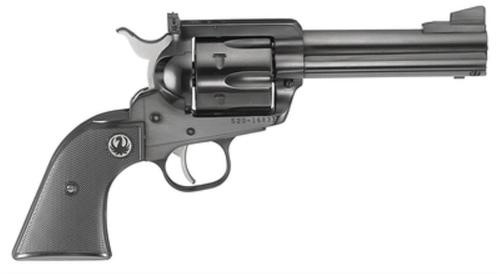
The Ruger New Model Blackhawk is the safety-modernized version of one of the most important single-action revolvers in American firearms history — the gun that filled the void Colt left when it discontinued the Single Action Army before World War II, and the platform that later spawned the Vaquero, the Bisley, and much of Ruger’s broader single-action revolver lineup. Introduce in 1973, the New Model represents a genuine engineering turning point: the introduction of Ruger’s transfer bar safety system, which fundamentally change how single-action revolvers could be safely carry. This guide covers the Blackhawk’s full history leading up to the New Model, what specifically change in 1973, full specifications, and what to know before buying one. Ruger New Model Blackhawk For Sale USA
The Gap the Blackhawk Filled: Ruger New Model Blackhawk For Sale USA
To understand why the Blackhawk exists at all, it helps to understand the market gap that preceded it. When Colt discontinue the Single Action Army before World War II, American shooters who love the classic single-action revolver — its deliberate manual cocking, its iconic profile, its deep connection to frontier-era firearms history — were left without a modern production option. No manufacturer rush to fill that gap. Bill Ruger recognized the opportunity in 1955 and answer it with the Blackhawk: a single-action revolver built on a modern investment-cast frame, initially chamber for the .357 Magnum cartridge, arriving at a moment when Westerns were enormously popular in movies and television. It was an instant commercial success and became the foundation of one of the most collected revolver lines in American history. Buy Ruger New Model Blackhawk in USA
Ruger’s Blackhawk also built directly on the momentum of the company’s earlier Single-Six — a .22 LR single-action revolver introduced two years prior — extending that same classic single-action concept into a genuine centerfire magnum platform.
The .44 Magnum Race: A Colorful (If Contested) Origin Story
One of the most frequently repeated stories in Blackhawk history involves how Ruger managed to bring a .44 Magnum-chambered Blackhawk to market at nearly the same time as Smith & Wesson’s own .44 Magnum revolver (the Model 29) — a genuinely remarkable feat given that Smith & Wesson had developed the .44 Magnum cartridge itself. According to popular legend, a Ruger employee found expended .44 Magnum cartridge cases discarded at a scrapyard and deduced from them that Smith & Wesson was about to launch a powerful new cartridge, allowing Ruger to move quickly and adapt the Blackhawk to the new round almost immediately after Smith & Wesson’s official release in 1956. This story is widely repeating in Blackhawk histories, though — as with many colorful origin stories in firearms history — it should be treating as popular legend rather than a definitively documenting fact. Ruger New Model Blackhawk For Sale USA
Three Production Eras: Flat-Top, Three-Screw, and New Model
Collectors and historians generally divide Blackhawk production into three distinct mechanical and cosmetic eras:
Flat-Top (1955–1962)
The earliest and most collectible configuration, distinguish by an adjustable rear sight that was not protecting by ears or a guard extending up from the frame — a detail that gives this era its Flat-Top nickname. Original barrel lengths included 4⅝, 6½, and 10 inches, with only a few hundred 10-inch-barrel guns ever produced. Flat-Top models command the highest values among collectors today, given both their status as the earliest configuration and their comparatively limited production numbers. Where to Buy Ruger New Model Blackhawk in USA
Three-Screw / Old Model (1962–1973)
In the late summer of 1962, starting around serial number 42689, Ruger redesign the .357 Blackhawk with a rear sight guard (similar to what the Super Blackhawk already use) to better protect the adjustable sight, along with a redesigned, fuller grip frame — designating the XR3-RED grip, which was also adopting on the .22-caliber Single-Six line. This era also introduce smooth walnut grips and switched the ejector rod housing and rear sight from steel to aluminum. This configuration is commonly call Three-Screw because of the number of visible screws on the side of the revolver, and it also saw a dramatic expansion of available calibers beyond the original .357 Magnum. From 1955 to 1973, combining both the Flat-Top and Three-Screw configurations, approximately 317,000 .357 Magnum Blackhawks alone were produce. Order Ruger New Model Blackhawk in USA
Critically, both the Flat-Top and Three-Screw eras use the same fundamental action as the original Colt Single Action Army: the hammer had to be half-cock to load and unload, and the revolver was not consider safe to carry with all six chambers loading, since the hammer resting directly on the sixth chamber when down.
New Model (1973–Present)
In 1973, specifically to eliminate accidents caused by the hammer jarring against a loaded round in the sixth chamber, Ruger introduced the New Model Blackhawk — a genuinely significant redesign of the internal action, not a cosmetic update. This is the version most commonly available and produced today, and it’s the specific configuration this guide focuses on. Ruger New Model Blackhawk Shop in USA
What Changed With the New Model: The Transfer Bar
This is the single most important thing to understand about the New Model Blackhawk. The New Model:
- Does not require half-cocking the hammer to load or unload the revolver, unlike every prior Blackhawk configuration and the traditional Colt SAA design.
- Introduced a transfer bar mechanism — a component that physically prevents the firing pin from contacting a chamber cartridge unless the trigger is actually pull, meaning the hammer itself never directly strikes the firing pin.
- Can be safely carried with all six chambers loaded, a genuine practical and safety improvement over the traditional “five-shooter” convention that owners of earlier single-action revolvers (Ruger or Colt) had to follow, resting the hammer on an empty chamber to avoid accidental discharge if the gun were dropped or struck.
Ruger viewed the New Model specifically as a way to limit both real-world firearms accidents and the company’s legal liability, and the change was significant enough that Ruger extended a retrofit program, offering free transfer bar conversions for owners of earlier Blackhawk (and other Ruger single-action) models who wanted the safety upgrade applied to their existing guns.
This same transfer bar innovation, introduced first on the New Model Blackhawk in 1973, subsequently became standard across Ruger’s other single-action revolvers, including the Single-Six and, later, the Vaquero line built directly on the New Model Blackhawk’s action and frame.
Ruger New Model Blackhawk for Sale in the USA
Where to Buy Ruger New Model Blackhawk in USA?
Full Specifications: New Model Blackhawk
| Specification | Details |
|---|---|
| Type | Single-action revolver |
| Action | New Model (transfer bar safety) |
| Half-Cock Required for Loading | No |
| Safety Mechanism | Transfer bar |
| Capacity | 6 rounds |
| Weight | 36–48 oz, depending on caliber, barrel length, and finish |
| Overall Length | 10¼”–13½”, depending on configuration |
| Barrel Lengths | 4⅝”–7½” (varies by caliber and model) |
| Grip Frame | XR3-RED (fuller grip, carried over from 1962 redesign) |
| Sights | Adjustable rear sight, protected by frame “ears”; fixed front blade |
| Total Blackhawk Production (all eras combined) | Approximately 2 million units |
Note: the Blackhawk line spans a wide range of calibers and specific model variants (including the higher-pressure-capable Super Blackhawk in .44 Magnum) — exact specifications should be confirm against Ruger’s current official catalog for the specific caliber and configuration being consider.
The Blackhawk’s Legacy: What It Made Possible
The New Model Blackhawk’s frame and action became the foundation for a substantial portion of Ruger’s broader single-action revolver catalog in the decades since:
- The Ruger Vaquero (1993–present) — took the New Model Blackhawk’s action and frame and fitted it with fixed sights specifically to serve the growing Cowboy Action Shooting market, as covered in a separate guide.
- The Ruger Bisley — a variant featuring the Bisley grip frame shape, built on the same New Model action.
- The Super Blackhawk — a higher-pressure-capable variant specifically intended for heavy .44 Magnum handloads, capable of handling significantly more powerful ammunition than standard factory .44 Magnum loads (which typically produce around 800 ft-lbs of muzzle energy with common factory loads like Federal’s 240-grain JSP).
Understanding the New Model Blackhawk’s transfer bar innovation is essential context for understanding nearly every other modern Ruger single-action revolver, since this 1973 redesign is the common mechanical ancestor of that entire product family. Ruger New Model Blackhawk Price in USA
New Model vs. Old Model (Flat-Top/Three-Screw): Which Should You Buy?
| Consideration | New Model (1973–present) | Old Model (Flat-Top/Three-Screw, 1955–1973) |
|---|---|---|
| Safety | Transfer bar — safe to carry all 6 loaded | No transfer bar — traditional 5-round loading practice |
| Loading Method | No half-cock required | Half-cock required |
| Collector Value | Generally lower than early Old Model examples | Flat-Top models command the highest collector premiums |
| Availability | Currently in production | Available only on the used/collector market |
| Best For | Shooters prioritizing modern safety and practical use | Collectors specifically seeking early, historically significant configurations |
Bottom line: if you want a Blackhawk to actually shoot regularly and carry with confidence, the New Model’s transfer bar safety makes it the clearly better practical choice. If you’re specifically drawn to Blackhawk collecting, the earlier Flat-Top and Three-Screw configurations hold historical and collector significance the New Model doesn’t carry to the same degree, given their status as the original, unmodified configurations.
Who Should Buy a New Model Blackhawk?
Shooters who want a genuine single-action revolver experience with modern safety — the transfer bar system offers real peace of mind that traditional single-action designs, including the original Blackhawk configurations and the Colt SAA, don’t provide.
Buyers interested in Ruger’s broader single-action ecosystem — understanding the New Model Blackhawk provides direct context for the Vaquero, Bisley, and Super Blackhawk, all of which share this same fundamental action. Ruger New Model Blackhawk For Sale USA
Cowboy Action Shooting participants or hunters wanting a rugged, dependable single-action platform for regular use, backed by Ruger’s reputation for exceptional durability in this product category.
Collectors specifically chasing early Blackhawk history should look at Flat-Top or Three-Screw Old Model examples on the used market instead, understanding that these lack the New Model’s safety improvements and require the traditional half-cock loading procedure and five-round carry practice.
Frequently Asked Questions by Americans
What’s the difference between the Old Model and New Model Blackhawk?
The New Model (1973–present) introduce a transfer bar safety mechanism, eliminating the need to half-cock the hammer for loading and allowing the revolver to be safely carry with all six chambers loading. Old Model configurations (Flat-Top, 1955–1962, and Three-Screw, 1962–1973) required half-cocking to load and were traditionally carry with only five rounds loading.
Can I get my Old Model Blackhawk converted to a transfer bar action?
Historically, yes — Ruger offered a free retrofit program allowing owners of earlier Blackhawk (and other Ruger single-action) models to have the transfer bar safety installed. Availability of this specific program today should be confirmed directly with Ruger.
What calibers is the Blackhawk available in?
The Blackhawk was originally chambered in .357 Magnum, quickly followed by .44 Magnum after Smith & Wesson’s 1956 release of that cartridge, with the caliber lineup expanding significantly during the Three-Screw era and beyond.
How many Blackhawks has Ruger made?
Approximately 2 million units across all production eras combined.
Is the New Model Blackhawk still in production?
Yes — the Blackhawk has been in continuous production since 1955, more than 70 years, with the New Model configuration representing current production.
Which Blackhawk era is most valuable to collectors?
Flat-Top models (1955–1962) generally command the highest values, given their status as the earliest configuration and comparatively limited production.
How is the Blackhawk related to the Vaquero?
The Ruger Vaquero, introduce in 1993, was built directly on the New Model Blackhawk’s action and large frame, fitted with fixed sights to create a more traditional Colt SAA-style appearance for the Cowboy Action Shooting market.
Ruger New Model Blackhawk Maintenance Tips
- Clean after every range session, with particular attention to the forcing cone and each individual cylinder chamber.
- Follow Ruger’s official disassembly instructions specific to the New Model transfer bar action, since it differs mechanically from the Old Model configurations and generic single-action cleaning guides may not apply directly. Ruger New Model Blackhawk Near Me
- Store properly, with a light coat of gun oil on exposed metal surfaces and dry, secure storage.
- If shooting a Super Blackhawk with heavy handloads, follow load data carefully and stay within safe pressure limits for your specific model and caliber.
- Leave anything beyond routine cleaning and basic maintenance to a qualified gunsmith, particularly work involving the transfer bar mechanism or internal lockwork.
- For Old Model or vintage examples specifically, have the action inspected by a gunsmith familiar with Ruger single-actions before regular use, and continue following traditional five-round loading practice unless the gun has been confirmed to have a transfer bar retrofit.
Conclusion
The New Model Blackhawk is the hinge point this entire Ruger single-action story swings on. Everything covered in the Vaquero guide — the transfer bar, the ability to carry six rounds loaded, the departure from traditional half-cock loading — didn’t originate with the Vaquero at all. It started here, in 1973, when Ruger looked at seventeen years of Blackhawks built on the same fundamentally unsafe action the Colt SAA had used since 1873, and fixed it. That’s a bigger deal than a spec update; it’s the moment Ruger’s single-action line stopped just imitating the classic design and started genuinely improving on it. Ruger New Model Blackhawk For Sale USA
Be the first to review “Ruger New Model Blackhawk in USA”
Related products
Ruger Firearm For Sale USA
Ruger Firearm For Sale USA
Ruger Firearm For Sale USA
Ruger Firearm For Sale USA
Ruger Firearm For Sale USA
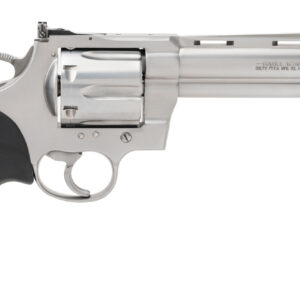
Ruger Firearm For Sale USA
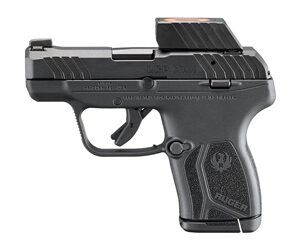
Ruger Firearm For Sale USA
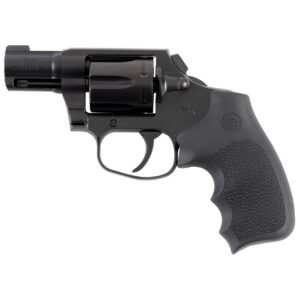
Ruger Firearm For Sale USA
Reviews
There are no reviews yet.